🇿🇦 Matric Results 2025 Overview (South Africa)
🇿🇦 Matric Results 2025 Overview (South Africa)
Historic National Pass Rate
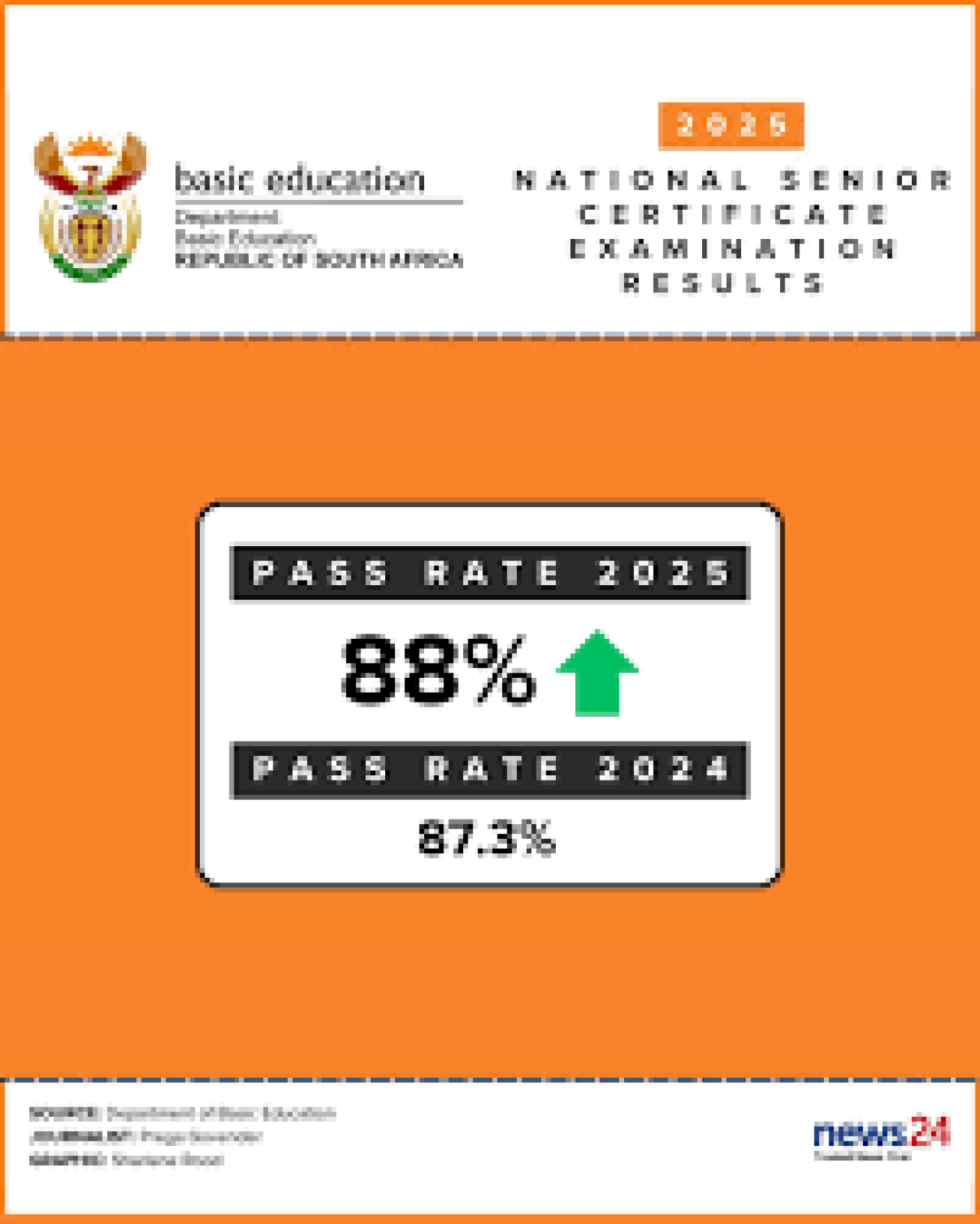
- The Class of 2025 achieved an 88% national pass rate, the highest in South African history.
- This represents an improvement from the 87.3% pass rate in 2024.
- Over 900,000 learners sat the exams at more than 6,000 centers nationwide.
What the Pass Rate Means
The National Senior Certificate (NSC) pass rate measures the percentage of candidates who met the minimum requirements to pass across all subjects. There are different pass types, including:
- Bachelor’s pass – qualifies learners for university entry.
- Diploma pass – for diploma study options.
- Higher certificate pass – for vocational/college access.
Nearly 46% of passes were at the bachelor’s pass level, meaning almost half the successful candidates are eligible for undergraduate study.
Provincial Pass Rate Breakdown (2025)
Below are the provincial percentages showing how each region performed:
|
Province |
Pass Rate (2025) |
Notes |
|
KwaZulu-Natal |
90.60% |
Top performing province nationally. |
|
Free State |
89.33% |
Strong performance, close to the top. |
|
Gauteng |
89.06% |
High pass rate among the biggest cohort. |
|
North West |
88.49% |
Above national average. |
|
Western Cape |
88.20% |
Slightly above the national rate. |
|
Northern Cape |
87.79% |
Biggest year-on-year improvement among provinces. |
|
Mpumalanga |
86.55% |
Strong showing, though below average. |
|
Limpopo |
86.15% |
Solid but below average compared to other provinces. |
|
Eastern Cape |
84.17% |
Lowest of the nine provinces. |
Key Insights
- KwaZulu-Natal leads the country, achieving over 90%. This marks a significant regional success.
- All provinces scored above 80%, showing broad improvement and widespread success across the country.
- The differences between provinces often reflect local educational resources, learner support systems, and socio-economic conditions.
Context & Trends
- The overall increase from 87.3% to 88% may seem small on paper, *but it’s meaningful given this was the largest cohort ever and shows real, sustained progress.
- The fact that all 75 education districts achieved a pass rate above 80% indicates that improvements are happening broadly, not just in a few strong areas.
Why This Matters
- Higher provincial pass rates can improve access to universities, vocational training, and job opportunities for learners.
- Consistent performance across regions helps reduce educational inequality and boosts national development.
- Strong results can also help shape government and education policy for future cohorts.
Click Here to read More